The honest summary
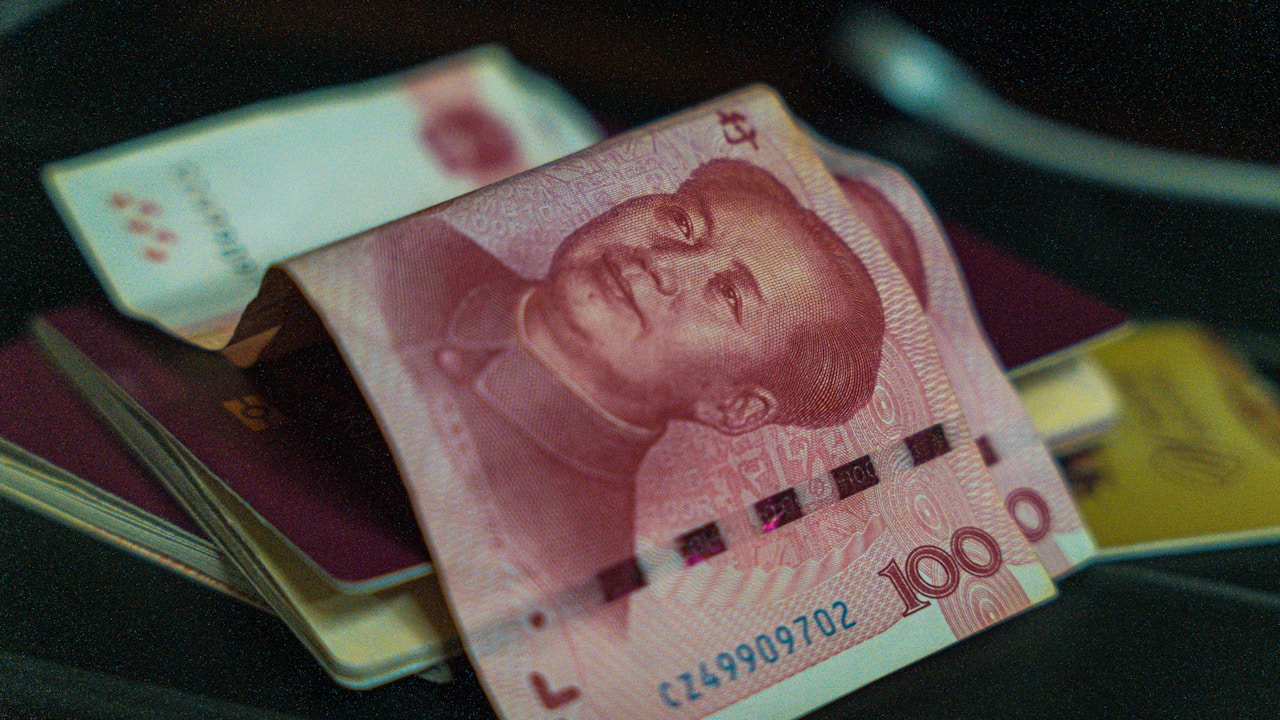
- Cash still works — and refusing it is not allowed for physical merchants. Carry some.
- Foreign cards work at the top end only — international hotels, big malls, airport shops, some upscale restaurants.
- ATMs are your best source of RMB — better rates than airport exchange counters.
- Apple Pay and Google Pay are basically useless at Chinese tills. China taps QR codes, not cards.
- A UnionPay card issued outside China is the one plastic that works almost everywhere.
Cash is legal tender — and the rule has teeth now
China's rules on RMB cash acceptance took effect on 1 February 2026 and require physical merchants to accept cash. Refusing it is not permitted, and consumers can report violations through the central bank's financial consumer protection hotline (12363). Enforcement has been visible in tourist-heavy areas.
What that means on the ground: hotels, supermarkets, chain restaurants and attraction ticket windows take cash without blinking. Street vendors and very small shops are more variable — not out of hostility, but because some younger vendors genuinely do not carry change any more. Break a ¥100 note early in the day at a convenience store and keep a supply of ¥10s and ¥20s.
Where foreign cards work — and where they do not
| Situation | Foreign Visa / Mastercard |
|---|---|
| International hotel chains | Usually yes |
| Large malls, department stores, duty free | Usually yes |
| Airport shops and lounges | Usually yes |
| Upscale restaurants in tourist areas | Often |
| Mid-range local restaurants | Hit or miss |
| Street food, markets, taxis, convenience stores | Usually no |
| Temple donations, shared bikes, vending machines | No — app or cash |
A simple rule of thumb: if the checkout displays UnionPay, Visa or Mastercard logos, try it. If there is no logo, assume not and ask before you order.
ATMs: the best way to get RMB
Airport exchange counters are convenient and offer the worst rates you will see. Bank ATMs give you the wholesale-ish rate and are everywhere in cities.
- Which banks: Bank of China is the most foreigner-friendly and has English interfaces; ICBC and China Construction Bank are also reliable. HSBC and Standard Chartered are smooth where you can find them.
- Where: airport terminals, international hotel lobbies, and city-centre branches. Avoid standalone machines inside small shops.
- Limits: roughly ¥3,000 per transaction, commonly around ¥10,000 per day — though your own bank may set lower caps, so check before you fly.
- Fees: many operators charge ¥20–30 per withdrawal, plus your issuer's own ATM and foreign transaction fees (typically 1–3%). Withdraw fewer, larger amounts.
- Always choose to be charged in RMB. If the screen offers your home currency, decline — that conversion carries a hidden markup.
- Tell your bank first so the card is not frozen for suspicious activity.
Exchanging cash: where to do it
If you arrive with dollars or euros, change a small amount at the airport to cover a taxi and a meal, then do the rest at a bank branch. Domestic banks require your passport and give the best rates; hotels may add a service charge. Keep the receipt if you might want to convert leftover RMB back at the end of the trip.
Apple Pay, Google Pay and contactless: do not count on them
China's retail payment world is QR-based rather than NFC-tap-based, so mobile wallets linked to foreign cards do not work at ordinary shop terminals. Do not build a plan around tapping your phone.
The exception worth knowing: Shanghai's metro began accepting contactless foreign cards at the gates in mid-2025, and by early 2026 more than 1.6 million such tap-to-ride trips had been recorded. Other cities are rolling out similar options. So the plastic in your pocket is not worthless — it is just narrow.
UnionPay: the card that behaves like a local
If your bank can issue a UnionPay card, get one before you travel. UnionPay runs China's domestic card network, and a UnionPay card issued outside mainland China works at far more terminals than Visa or Mastercard — in many cases at essentially any POS machine in the country, plus ATMs. Coverage varies by issuer, so ask your bank what they offer.
How much cash to carry
| Your setup | Recommended cash |
|---|---|
| WeChat Pay and Alipay both working | ¥500–1,000 as a backup, mostly in small notes |
| One wallet working | ¥1,000–2,000 |
| No mobile wallet at all | Plan for roughly ¥300–500 per day per person |
Reasons you will be glad you have notes: temple donations, tiny market stalls, a tip jar, a dead phone battery, a wallet that suddenly needs re-verification, and the friend's father's tea shop that only takes cash.
If a shop refuses cash
It happens occasionally, usually because nobody on shift can make change. Ask for a manager, try smaller notes, or simply go elsewhere. If you want to make a point, the central bank's financial consumer hotline is 12363. In practice, a companion who can say the right thing in Mandarin resolves these moments in about ten seconds.
Quick answers
Can tourists still use cash in China?
Yes. Refusing RMB cash is against the rules for physical merchants in China, and enforcement has tightened. In practice cash works reliably at hotels, supermarkets, chain restaurants and ticket windows, and is hit-or-miss with street vendors who may not carry change.
Do Visa and Mastercard work in China?
Only in a minority of places: international hotel chains, large department stores, airport shops, duty free and some upscale restaurants. Local restaurants, taxis, convenience stores, markets and most attractions will not take a foreign card at the till.
Which ATMs in China accept foreign cards?
Bank of China, ICBC and China Construction Bank are the most foreigner-friendly, followed by HSBC and Standard Chartered where you find them. Look for your card network's logo on the machine. Airport, international hotel lobby and city-centre branch ATMs are the safest bets.
How much cash can I withdraw from a Chinese ATM?
Expect roughly 3,000 RMB per transaction and commonly around 10,000 RMB per day, though your own bank may set lower limits. Withdrawal fees are often 20 to 30 RMB from the machine operator, plus your issuer's own foreign ATM and currency charges.
Should I accept the ATM's currency conversion offer?
No. If the ATM offers to charge you in your home currency, decline it. That dynamic currency conversion adds a hidden markup of several percent on top of everything else. Always choose to be charged in RMB.
Do Apple Pay and Google Pay work in China?
Not at ordinary shops. China's payment ecosystem is QR-based rather than NFC-tap-based, so wallets linked to foreign cards do not work at Chinese point-of-sale terminals. The main exception is transport: Shanghai's metro accepts contactless foreign cards at the gates, and more cities are following.
How much cash should I carry in China?
If your wallets work, 500 to 1,000 RMB in small notes is enough as a backup. If you plan to rely mainly on cash, budget roughly 300 to 500 RMB per day for food, transport and entry fees, and keep plenty of 10s and 20s.
What should I do if a shop refuses my cash?
Stay calm and ask for a manager, or move on. Refusing RMB is not permitted for physical merchants, and consumers can report it through the central bank's financial consumer hotline. In practice, the faster fix is to pay another way or shop elsewhere.