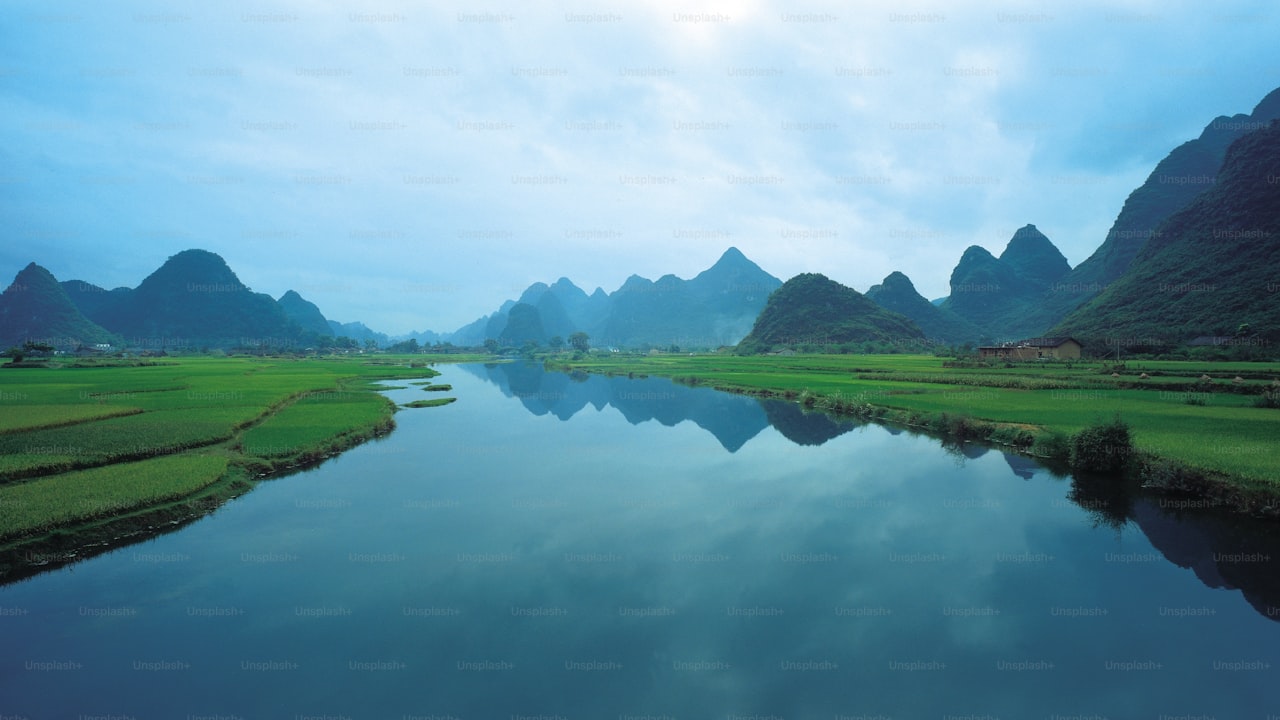
Stand-up paddleboarding the Yulong River outside Yangshuo is one of the few outdoor experiences in China that feels almost unreal — flat green water, limestone towers rising straight out of the rice fields on both banks, and no boat traffic for a change. If you have searched for whether paddleboarding in Guilin is actually possible, the short answer is yes, and it is easier to arrange than most visitors expect.
This guide covers exactly where you paddle, what a session involves, realistic costs, when the river closes, and what to pack.
Why the Yulong River works for paddleboarding
The Li River gets the postcards, but the Yulong River (Yulong He) is the paddling river. It is a tributary that runs roughly parallel to the main Li, narrower and slower, with long flat stretches broken by small stone bridges and shallow runs. Three things make it unusually good:
- The water is calm. Very little current on the upper sections, so drifting off course is not a real risk.
- The scenery is close. Unlike a cruise where the karst peaks stay in the distance, the towers rise directly from the riverbanks a few metres from your board.
- The season is long. Paddleable from roughly March through November, with two comfortable windows at either end.
The main Li River itself can also be paddled, and it is spectacular in its own way. But it has commercial cruise boats, faster current and deep channels. Do it with an operator who knows the water, not alone.
What a session actually looks like
The standard format is a one-way downstream paddle. An operator drives you and your board upstream past the stretch you will paddle, you launch, and you drift gently down for one to three hours. There is a pickup point at the bottom. You are not paddling against the current at any point.
- First-timers: expect twenty minutes of wobbly kneeling and then an easy transition to standing. The rental boards are wide all-round models, not narrow racing boards, which is why almost everyone manages it.
- Sunrise sessions: some operators run 6:30am launches. Cold-ish at first, but the water is usually flat as glass and you will have the river almost to yourself.
- Half-day options: a longer downstream route with a riverside lunch stop, usually three to four hours on the water.
Costs and what you get
| Session | Typical length | Typical price (RMB) | Who it suits |
|---|---|---|---|
| Short intro paddle | 1–1.5 hours | 150–220 per person | First-timers, families |
| Standard half-day paddle | 2–3 hours | 220–300 per person | Most visitors — the sweet spot |
| Sunrise private session | 2 hours | 300+ per person | Photographers, anyone avoiding crowds |
| Full day with driver and guide | 4–6 hours incl. transport | 600+ per person | Keen paddlers, small groups |
Prices are typical 2026 ranges, not quotes. Group size matters — two people are always cheaper per head than one. Paying by phone with Alipay or WeChat Pay is normal; cash is accepted too but carry small notes.
Season and when the river closes
| Months | Conditions | Verdict |
|---|---|---|
| March – early June | Warming up, green, occasional rain | Good. April–May is excellent |
| June – August | Hot, humid, heavy rain and flood risk | Unreliable — the river can close for days |
| September – November | Warm days, cooler evenings, stable water | Best window. Come in October |
| December – February | Cool to cold, very quiet, cheapest rates | Too cold for most people on the water |
The one thing people get wrong: rain upstream does not have to fall on Yangshuo to close the river. After a heavy storm the water turns opaque brown and operators suspend both paddling and bamboo rafting for a day or two. Between June and August, always carry a land-based backup plan.
What to bring and what operators provide
- Provided: board, paddle, life jacket, usually a dry bag, and transport to the launch point.
- Bring: quick-dry clothes or swimwear, water shoes or strapped sandals, a hat, sunscreen, and a phone lanyard.
- Worth having: sunglasses with a retainer strap — losing sunglasses to the Yulong is the single most common loss reported by visitors.
- Leave behind: anything you would mind losing, including non-waterproof cameras without a float.
Sun exposure is the thing visitors underestimate. There is effectively no shade on the river, and a two-hour session at midday in September is enough to burn badly.
Safety, honestly
- Wear the life jacket even if you are a strong swimmer. Operators insist for good reasons — the river has deep holes and cold water below the warm surface layer.
- Do not paddle the main Li River alone. Current and boat traffic together are a real hazard.
- If you cannot swim well, say so when booking. Nobody will refuse you, but they will adjust the board and the route.
- Check conditions that morning rather than trusting a forecast from two days earlier.
Getting to Yangshuo with a plan to paddle
Guilin Liangjiang Airport (KWL) is the nearest airport, and you can go directly to Yangshuo without backtracking through Guilin city. From Guilin itself there are three routes: the Li River cruise (about four hours, scenic, fixed schedule), high-speed rail to Yangshuo station (roughly 30–50 minutes, then about 40 minutes by road), or a private car (around 1–1.5 hours door to door).
If you are travelling with your own board, inflatable or otherwise, the private car is the only option that does not become an argument about luggage.
Combining a paddle day with everything else here
A well-built Yangshuo stay mixes one water day with one or two land days rather than stacking activities randomly. See the full Yangshuo outdoor activities guide for how paddling compares with climbing and cycling, and a three-day plan that sequences them properly.
Quick answers
Can you paddleboard in Guilin and Yangshuo?
Yes, and it is one of the best places in China to do it. The Yulong River, a calm tributary of the Li River near Yangshuo, has flat water, a gentle current and karst towers on both banks. Operators along the river rent boards and kayaks, and most first-timers paddle comfortably on their first try.
Where exactly do you paddleboard in Yangshuo?
The Yulong River (Yulong He) is the main spot, with several launch points between the old stone bridges upstream of town. Some operators also run quiet stretches of the main Li River and the shallows near Xingping. Ask specifically for the Yulong if you want flat water rather than current.
Do I need experience to stand-up paddleboard in Yangshuo?
No. Rental boards here are wide, stable all-round boards rather than narrow touring boards, so balancing is much easier than people expect. Most people are standing within the first ten minutes. If you are nervous, start on your knees and stand once you are steady.
How much does paddleboarding cost in Yangshuo?
A guided board or kayak session typically runs about 150-300 RMB per person depending on length and whether transport upstream is included. A private full-day arrangement with a driver and guide costs more. Prices are quoted per person, and cash and mobile payment are both accepted.
Is it safe to paddleboard on the Li River?
On the Yulong, yes with a life jacket. The main Li River has real current, underwater drop-offs and commercial boat traffic, so paddle it only with a local operator who knows the channels. After heavy rain the water turns brown and both paddling and bamboo rafting are often suspended for a day or two.
What should I bring for a paddleboarding session?
Swimwear or quick-dry clothes, water shoes or sandals that stay on, a hat, reef-safe sunscreen, and a dry bag for your phone. Life jackets are provided. Sunglasses with a strap are worth having — losing them in the river is the most common casualty.
What time of day is best for paddleboarding?
Early morning, ideally launching by 8am. The water is glassy before the wind picks up, the air is cooler, and you avoid both the heat and the tourist bamboo rafts that start running later in the morning.
What is the best month for paddleboarding in Guilin?
April to early June and September to November. July and August are hot and carry the highest chance of heavy rain that closes the river. December to February is quiet and clear but too cold for most people to enjoy being on the water.
Can I paddleboard if I cannot swim?
You should be comfortable in water and able to swim to paddle here — operators require life jackets, but this is open water with real depth. If you are a weak swimmer, say so when booking; operators can put you on a larger, steadier board and keep the route short.
How do I book a paddleboarding session in Yangshuo?
Most guesthouses can arrange it the evening before, or you can book directly with operators along the river. Booking through a private companion gets you someone who can check river conditions in the morning, negotiate in Chinese, and reorganise the day if rain closes the water.