Why two weeks is the best first trip
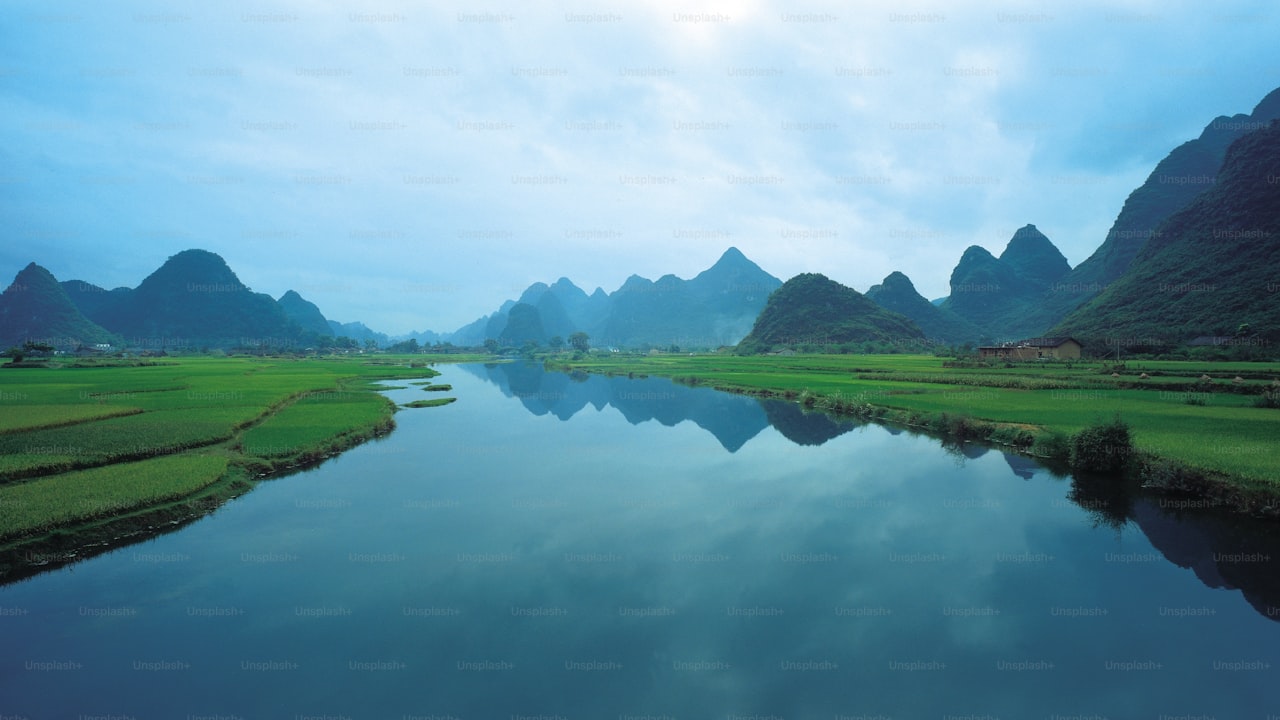
Ten days gets you the cities. Two weeks gets you the cities and the thing most first-timers are actually chasing when they picture China — the karst peaks, the river, the countryside. It is also the shortest trip length where you can stay two or three nights in each place instead of living out of a suitcase.
The trap with two weeks is not boredom; it is overfilling. Four bases across fourteen days is comfortable. Five starts to feel like work. If you catch yourself adding a fifth city, add nights to the four you already have.
The route
| Base | Nights | What it gives you | Arriving by |
|---|---|---|---|
| Beijing | 4 | Great Wall, Forbidden City, hutongs, duck | International flight |
| Xi'an | 2 | Terracotta Warriors, city wall, Muslim Quarter | Train ~4.5–6h |
| Yangshuo | 3 | Karst scenery, Li River, cycling, paddleboarding | Flight ~2h to Guilin, then road |
| Shanghai | 3 | Bund, Concession, skyline, food | Flight ~2.5h from Guilin |
Twelve nights, fourteen days, with the two extra days absorbed by arrival, departure and the transfers. Fly into Beijing and home from Shanghai — an open-jaw ticket removes a backtracking day and rarely costs more.
Day by day
Days 1–4 — Beijing
Four nights, and you will use them. Day 1 is arrival and a walk. Day 2 is the Forbidden City, Tiananmen and Jingshan for the rooftop view — note that the Forbidden City closes on Mondays and needs advance booking with your passport. Day 3 is the Great Wall at Mutianyu, which is a full day once you account for the drive. Day 4 is the Temple of Heaven, the hutongs, and Peking duck.
Full hour-by-hour detail for the Beijing portion is in our 3-day Beijing itinerary, and the wall day is broken down in the Great Wall guide.
Days 5–6 — Xi'an
Take a morning train south: Beijing West to Xi'an North runs about 4.5–6 hours, with the fastest services a little over four. You land with the afternoon free, so use it on the city wall — roughly 14km around, cycleable in about two hours, and best at dusk.
Day 6 is the Terracotta Warriors, about an hour east of the city. Go early, see Pit 1 first, allow two to three hours. Evening in the Muslim Quarter for skewers and hand-pulled noodles. Ticketing and crowd-avoidance detail here.
Days 7–9 — Yangshuo
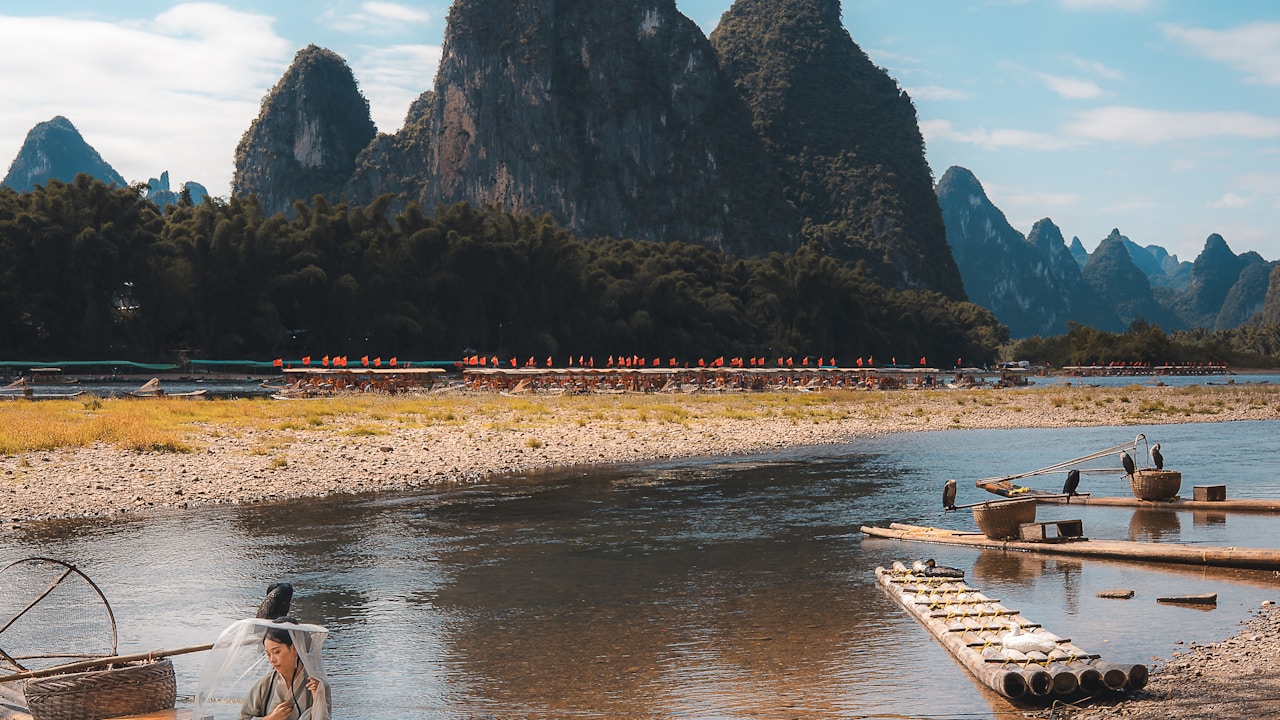
Fly from Xi'an to Guilin — around two hours, and this is one of the few legs where flying clearly beats the train, which is long and indirect. From Guilin airport it is about an hour by road to Yangshuo.
Three nights in Yangshuo is the number that makes this trip work. It gives you a Li River or Yulong River bamboo raft, a countryside cycle or e-bike loop through the rice paddies, a climb if you want one, and a morning that is simply slow. West Street is the backpacker strip — fine for a beer, not the reason you came.
Our Yangshuo outdoor guide covers paddleboarding, climbing, cycling and the best sunrise viewpoints, and the Guilin & Yangshuo itinerary has the two-to-three-day version worked out in detail.
Days 10–13 — Shanghai
Fly Guilin to Shanghai, around two and a half hours. Then three days in the city that needs the least planning: the Bund in the morning, the Former French Concession in the afternoon, the Pudong skyline at dusk. Yu Garden, the Shanghai Museum, Xintiandi and Tianzifang fill the gaps.
One of those days should be a day trip — Suzhou is 30 minutes by train and has the best classical gardens in China. Zhujiajiao is closer, on the metro, and gives you canals and stone bridges if you would rather stay near the city.
Day 14 — Depart
Buffer and fly out. Confirm which airport: Hongqiao and Pudong are about an hour apart by metro, and mixing them up is a real way to miss a long-haul flight.
The Chengdu alternative
If food and pandas matter more than landscape, swap Yangshuo for Chengdu. Four nights there gives you the panda base, a teahouse afternoon, Sichuan hotpot, and a day trip to the Leshan Giant Buddha. Chengdu also connects to Xi'an by fast rail, so the route stays clean.
| Choose | If you want | Best for |
|---|---|---|
| Yangshuo & Guilin | Karst peaks, river, cycling, outdoor days | Photographers, active travellers, families with older kids |
| Chengdu | Sichuan food, pandas, teahouses, Leshan | Food-led trips, slower travellers, panda priority |
Pick one. Trying to do both in fourteen days means spending the extra time in airports rather than in either place.
What two weeks costs
| Item | Typical range (per person) |
|---|---|
| Hotels, 12 nights mid-range | $850–1,500 |
| Domestic flights (Xi'an–Guilin, Guilin–Shanghai) | $200–400 |
| Rail (Beijing–Xi'an) | $80–130 |
| Entry tickets & activities | $130–220 |
| Food | $350–650 |
| Local transport | $90–160 |
All in, roughly $1,700–3,000 per person excluding international flights. The domestic flights are the main addition over a ten-day trip; booking them six to eight weeks out usually halves that line.
Pacing rules for two weeks
- No one-night stays. Two nights minimum everywhere, three where scenery is involved. One-night stops cost you half a day each in pure logistics.
- Alternate intensity. Follow a big city with a landscape stop, not another museum city. Beijing → Yangshuo works because the contrast is the rest.
- One light half-day every four or five days. A teahouse afternoon is a better memory than a sixth rushed sight.
- Leave a real buffer at the end. Weather, delays and the temptation of one more meal all need somewhere to go.
- Book trains at the 15-day window and flights six to eight weeks out. These are the two things that actually sell out.
When to go
September to November is the strongest window — clear air in Beijing, comfortable temperatures in the south, and the Li River at its best. March to May is nearly as good, with the caveat that spring in Yangshuo can be wet. Avoid the first week of October and Chinese New Year entirely. Month-by-month guidance is in best time to visit China.
Where a companion fits in two weeks
Two weeks is long enough that doing all of it independently gets tiring, and short enough that you do not want a fixed group. The days people most often want help on: arrival in Beijing, the Great Wall, the Terracotta Warriors, and the Yangshuo outdoor days — the last one especially, because the good operators, the quiet stretches of river and the reliable gear rental places are not findable from a hotel lobby. Most travellers take four to six companion days across a two-week trip and do the rest on their own.
Quick answers
Is two weeks enough for China?
Two weeks is the best length for a first trip. It is the shortest window that fits the classic cities plus one landscape region at a pace you actually enjoy, and it allows two or three nights in each place rather than constant one-night stops.
Should I add Guilin or Chengdu with two weeks?
Guilin and Yangshuo if you want landscape, cycling and river scenery. Chengdu if you care more about food, pandas and teahouse culture. Both work; do not try to add both, because you would spend the extra days in transit rather than in either place.
How do I get from Xi'an to Guilin?
Fly. The rail journey is long and indirect, while the flight is around two hours. This is one of the few legs on a China route where flying clearly beats the train, and it is the reason a two-week trip feels comfortable.
How many nights in each city?
Beijing four, Xi'an two, Yangshuo three, Shanghai three. That gives you two nights minimum everywhere, three where the scenery deserves it, and one night less in Beijing than most first-timers assume they need.
Do I need an open-jaw ticket?
Yes if you can. Flying into Beijing and home from Shanghai removes an entire backtracking day and usually costs little or no more than a return ticket. On a two-week trip it is the single easiest way to buy yourself a free day.
Is two weeks too long for a first trip?
No. The risk with two weeks is not boredom but overfilling it. Four bases across fourteen days is comfortable; five starts to feel like work. If you find yourself adding a fifth city, add nights to the four you have instead.
Can I do this route with kids?
Yes, and two weeks suits families better than one. Yangshuo in particular is where children usually enjoy China most: cycling, bamboo rafts, cormorant fishing and easy outdoor days. Cut a Beijing museum and add a Yangshuo day.